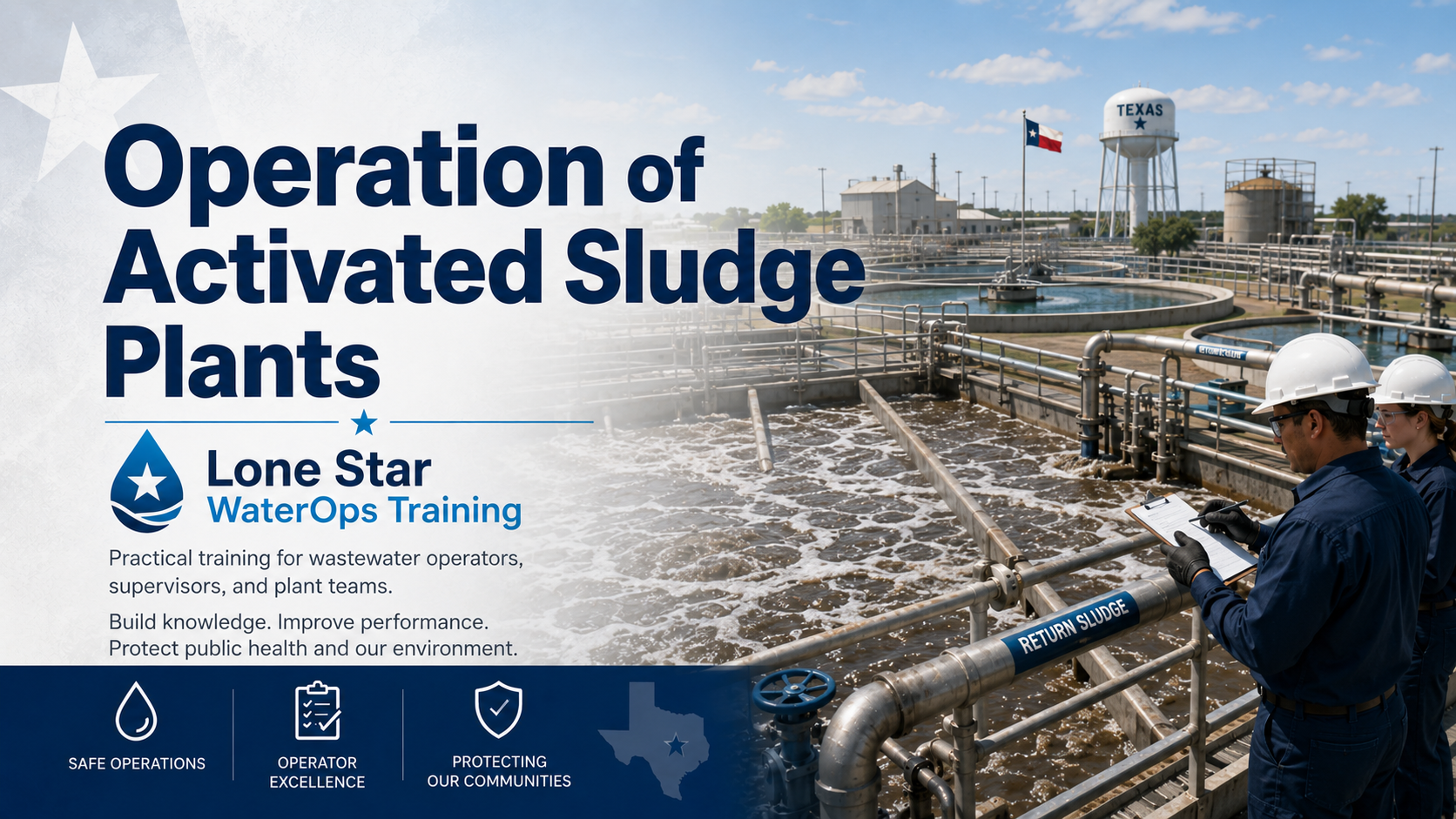
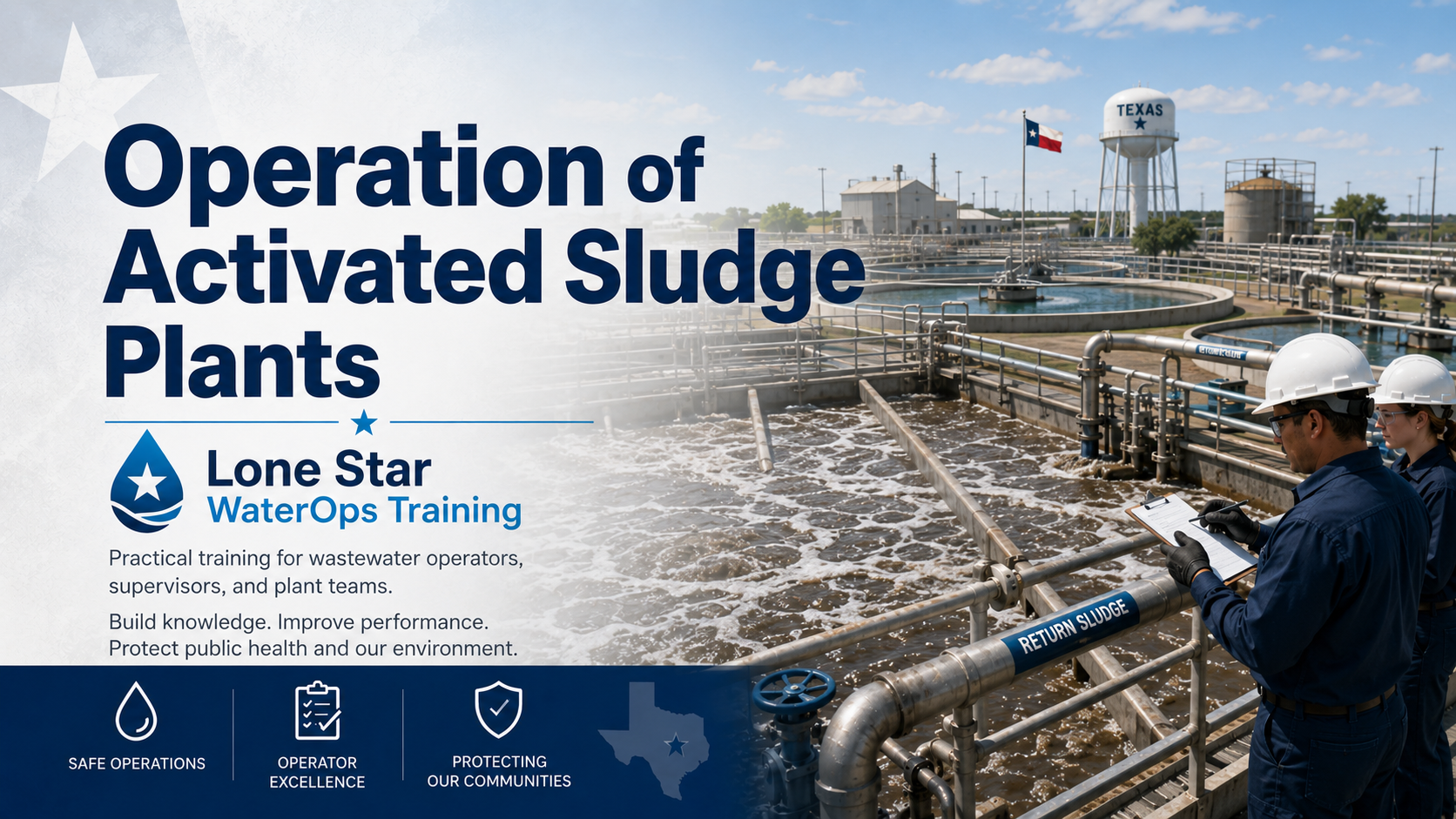
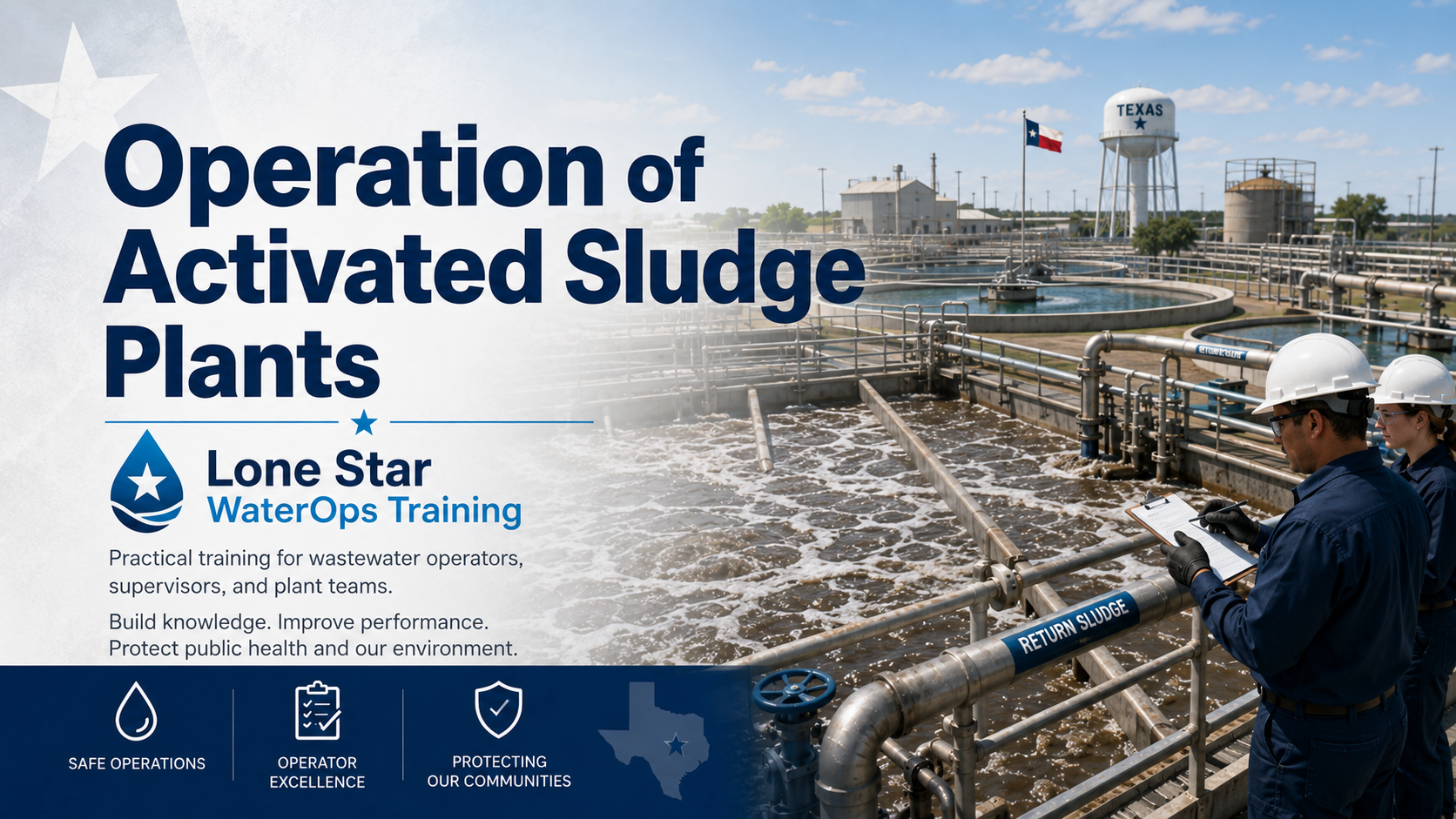
This specialized course examines the biological principles and operational controls associated with activated sludge wastewater treatment. Topics include suspended-growth treatment, microbiology, aeration basins, secondary clarifiers, return activated sludge, waste activated sludge, dissolved oxygen control, sludge-age management, process-control calculations, nitrification, microscopic examination, and the evaluation of sludge-settling characteristics. Participants also learn to recognize and respond to common operational problems such as sludge bulking, foaming, poor settling, and process instability. 20-hour course
Prerequisites
There are no prerequisites for this course.
Course Completion Requirements
Participants must provide information for all required fields, including their U.S. citizenship/permanent resident status, and meet all attendance and course completion requirements. If this information is not provided, the participant may be considered incomplete and may not receive a certificate of completion.
Participant Must Provide
Simple calculator with square root function.
Photo identification on the first day of class. See the “Policy” page of the website for approved forms of identification and additional guidelines.
Course materials, notebook, and writing utensils as directed by the instructor.
Attendance Requirements
Class attendance is an essential part of the education process. Participants are expected to attend all class sessions, activities, discussions, and required exercises. This course requires participants to attend a minimum of 100% of the class hours as a component of successful course completion. During the course, the instructor will review any additional attendance or participation requirements.
Recommended Prior Training Courses or Knowledge
Prior completion of Basic Wastewater Operations and Wastewater Treatment is recommended but not required. Participants should have basic familiarity with biological treatment, aeration, clarification, solids handling, and wastewater process monitoring.
Upon Successful Completion, Participants Will Be Able To
Explain the fundamentals of the activated sludge process and biological wastewater treatment.
Identify key process control parameters, including dissolved oxygen, MLSS, MLVSS, SVI, sludge age, F/M ratio, return activated sludge, and waste activated sludge.
Recognize common activated sludge problems, including bulking, foaming, rising sludge, pin floc, and poor settling.
Evaluate operational adjustments related to aeration, sludge wasting, return rates, and clarifier performance.
Apply process control concepts to improve treatment efficiency and effluent quality.