
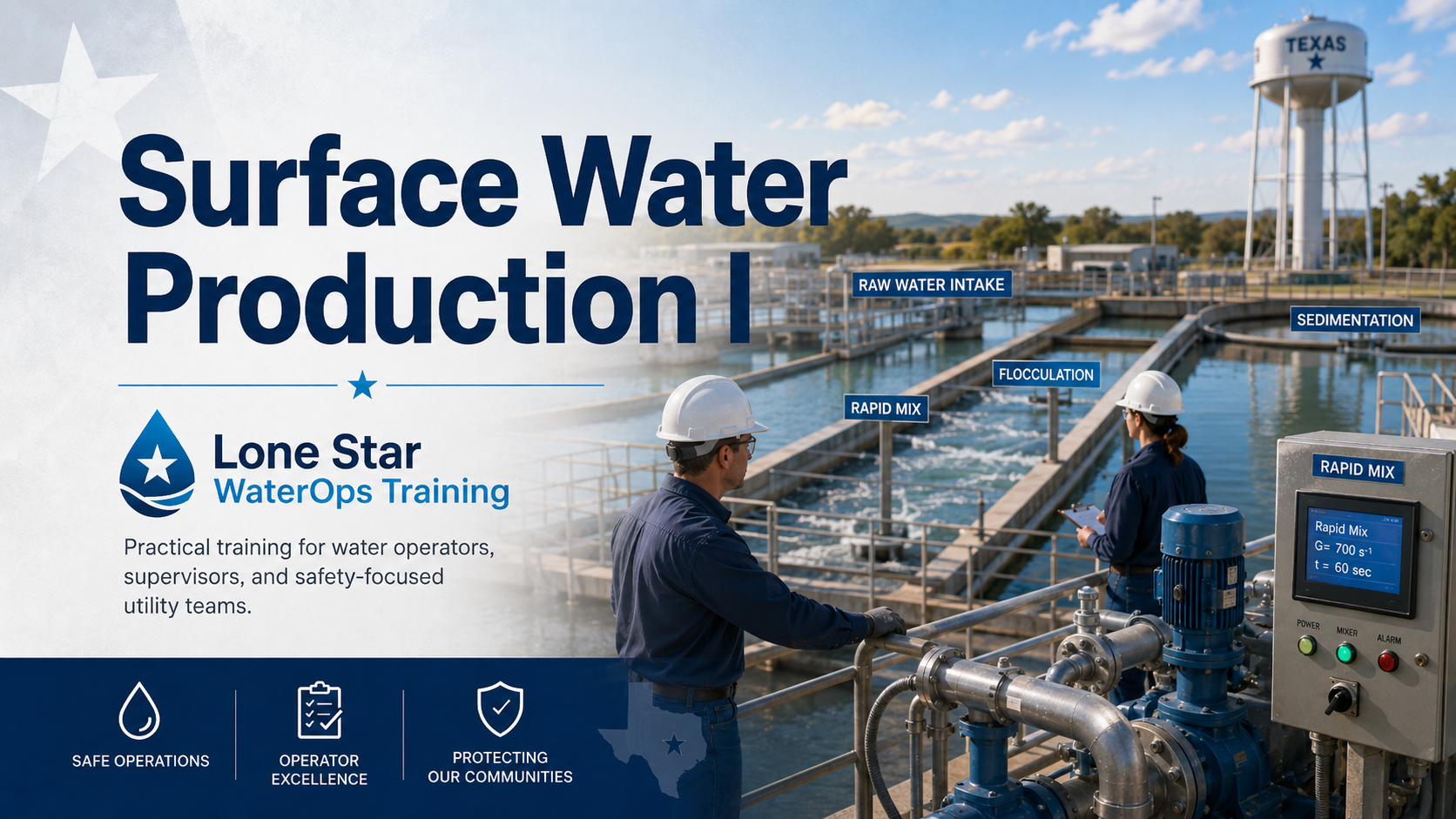
This course covers the first major steps in treating surface water. Topics include raw water intake, coagulation, rapid mixing, flocculation, sedimentation, turbidity control, process monitoring, and basic treatment chemistry. It is built for operators working at or preparing for surface water treatment plants. 20-Hr Course
There are no prerequisites for this course.
Participants must provide information for all required fields, including their U.S. citizenship/permanent resident status, and meet all attendance and course completion requirements. If this information is not provided, the participant may be considered incomplete and may not receive a certificate of completion.
Simple calculator with square root function.
Photo identification on the first day of class. See the “Policy” page of the website for approved forms of identification and additional guidelines.
Course materials, notebook, and writing utensils as directed by the instructor.
Class attendance is an essential part of the education process. Participants are expected to attend all class sessions, activities, discussions, and required exercises. This course requires participants to attend a minimum of 100% of the class hours as a component of successful course completion. During the course, the instructor will review any additional attendance or participation requirements.
Prior completion of Basic Water Operations is recommended but not required. Participants should have a basic understanding of water treatment plant operations, operator safety, water quality, and public water system responsibilities.
Describe surface water sources and raw water quality concerns.
Explain conventional surface water treatment processes, including coagulation, flocculation, sedimentation, filtration, and disinfection.
Identify basic chemical feed, jar testing, and process control considerations.
Recognize the importance of turbidity control, pathogen removal, and treatment barriers.
Apply basic operational knowledge to support safe and compliant surface water treatment.
This course covers the first major steps in treating surface water. Topics include raw water intake, coagulation, rapid mixing, flocculation, sedimentation, turbidity control, process monitoring, and basic treatment chemistry. It is built for operators working at or preparing for surface water treatment plants. 20-Hr Course
There are no prerequisites for this course.
Participants must provide information for all required fields, including their U.S. citizenship/permanent resident status, and meet all attendance and course completion requirements. If this information is not provided, the participant may be considered incomplete and may not receive a certificate of completion.
Simple calculator with square root function.
Photo identification on the first day of class. See the “Policy” page of the website for approved forms of identification and additional guidelines.
Course materials, notebook, and writing utensils as directed by the instructor.
Class attendance is an essential part of the education process. Participants are expected to attend all class sessions, activities, discussions, and required exercises. This course requires participants to attend a minimum of 100% of the class hours as a component of successful course completion. During the course, the instructor will review any additional attendance or participation requirements.
Prior completion of Basic Water Operations is recommended but not required. Participants should have a basic understanding of water treatment plant operations, operator safety, water quality, and public water system responsibilities.
Describe surface water sources and raw water quality concerns.
Explain conventional surface water treatment processes, including coagulation, flocculation, sedimentation, filtration, and disinfection.
Identify basic chemical feed, jar testing, and process control considerations.
Recognize the importance of turbidity control, pathogen removal, and treatment barriers.
Apply basic operational knowledge to support safe and compliant surface water treatment.