
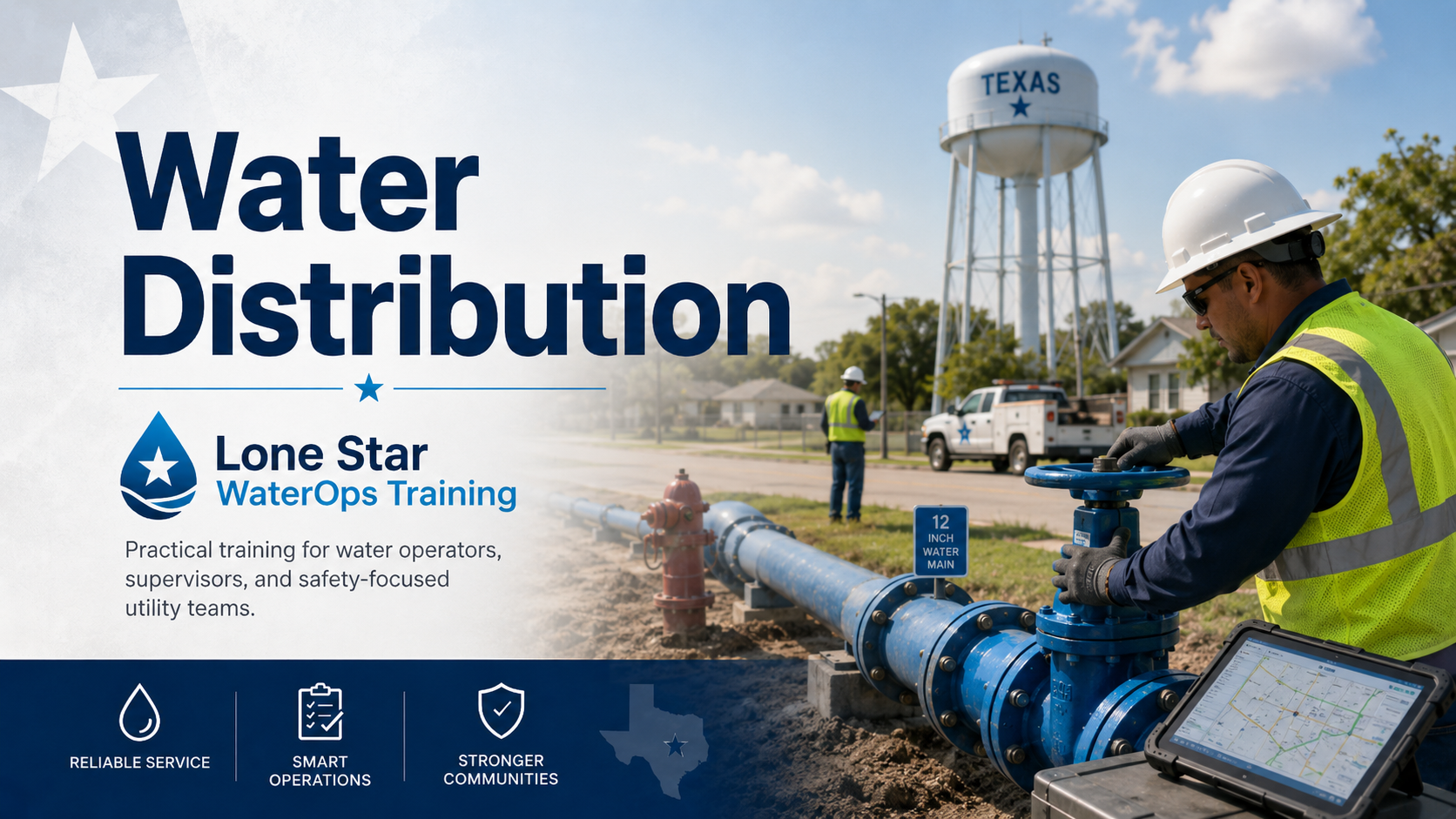
This course focuses on moving safe drinking water from the plant or well site to the customer. Topics include water mains, valves, hydrants, storage tanks, pressure zones, pumps, flushing, line repairs, cross-connection concerns, disinfectant residuals, and distribution system water quality. It is a key course for both plant and field operators. 20-Hr Course
There are no prerequisites for this course.
Participants must provide information for all required fields, including their U.S. citizenship/permanent resident status, and meet all attendance and course completion requirements. If this information is not provided, the participant may be considered incomplete and may not receive a certificate of completion.
Simple calculator with square root function.
Photo identification on the first day of class. See the “Policy” page of the website for approved forms of identification and additional guidelines.
Course materials, notebook, and writing utensils as directed by the instructor.
Class attendance is an essential part of the education process. Participants are expected to attend all class sessions, activities, discussions, and required exercises. This course requires participants to attend a minimum of 100% of the class hours as a component of successful course completion. During the course, the instructor will review any additional attendance or participation requirements.
Prior completion of Basic Water Operations or equivalent water utility experience is recommended but not required. Participants should have basic familiarity with drinking water systems, disinfection, customer service, and utility field operations.
Identify major components of a water distribution system, including mains, valves, hydrants, meters, storage tanks, and service connections.
Explain distribution system operation, maintenance, flushing, pressure control, and water quality protection.
Describe cross-connection control, backflow prevention, and contamination prevention concepts.
Recognize common distribution system problems, including leaks, pressure loss, main breaks, and water quality complaints.
Apply safe work practices and regulatory awareness to distribution system operations.
This course focuses on moving safe drinking water from the plant or well site to the customer. Topics include water mains, valves, hydrants, storage tanks, pressure zones, pumps, flushing, line repairs, cross-connection concerns, disinfectant residuals, and distribution system water quality. It is a key course for both plant and field operators. 20-Hr Course
There are no prerequisites for this course.
Participants must provide information for all required fields, including their U.S. citizenship/permanent resident status, and meet all attendance and course completion requirements. If this information is not provided, the participant may be considered incomplete and may not receive a certificate of completion.
Simple calculator with square root function.
Photo identification on the first day of class. See the “Policy” page of the website for approved forms of identification and additional guidelines.
Course materials, notebook, and writing utensils as directed by the instructor.
Class attendance is an essential part of the education process. Participants are expected to attend all class sessions, activities, discussions, and required exercises. This course requires participants to attend a minimum of 100% of the class hours as a component of successful course completion. During the course, the instructor will review any additional attendance or participation requirements.
Prior completion of Basic Water Operations or equivalent water utility experience is recommended but not required. Participants should have basic familiarity with drinking water systems, disinfection, customer service, and utility field operations.
Identify major components of a water distribution system, including mains, valves, hydrants, meters, storage tanks, and service connections.
Explain distribution system operation, maintenance, flushing, pressure control, and water quality protection.
Describe cross-connection control, backflow prevention, and contamination prevention concepts.
Recognize common distribution system problems, including leaks, pressure loss, main breaks, and water quality complaints.
Apply safe work practices and regulatory awareness to distribution system operations.